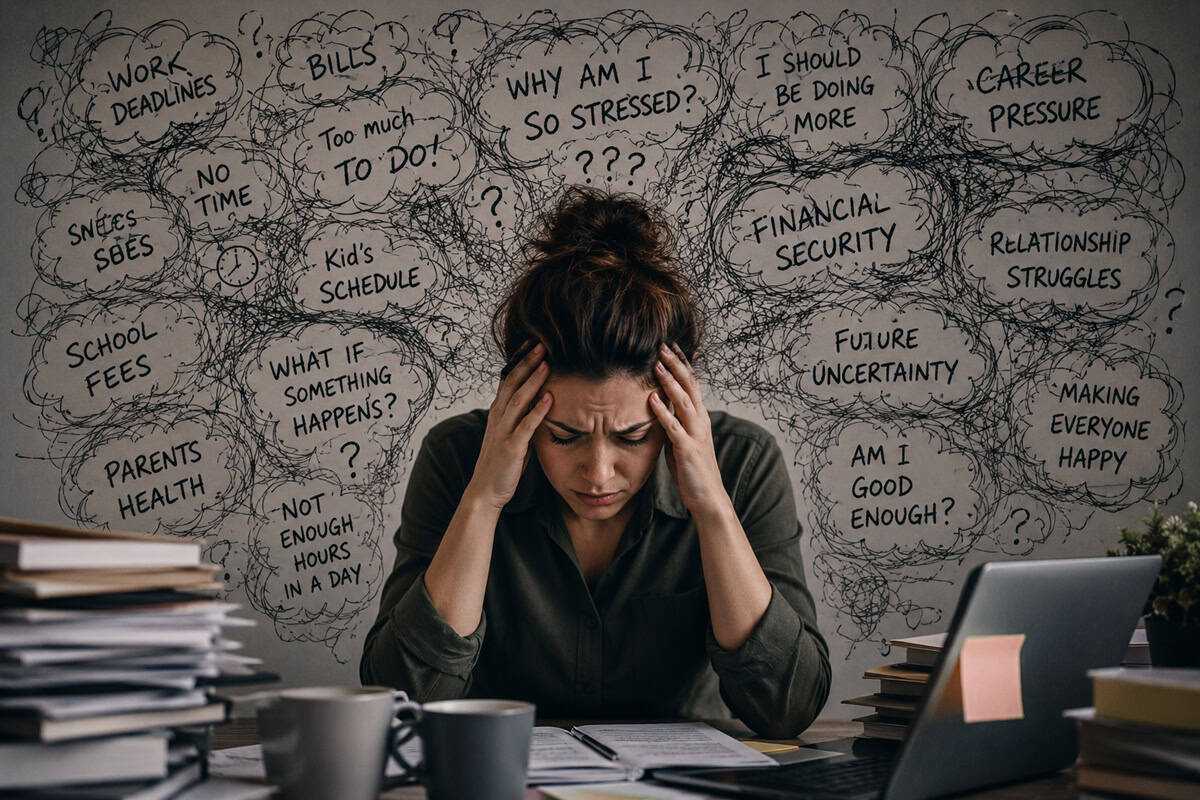
The exam season is looming for many families – because it isn’t just the teenagers who suffer from exam stress, although the anxiety experienced by those taking the exams can be very acute – it can be the whole family. Parents worry about their children’s future, worry that they aren’t doing enough work, or worry that they are doing too much work! The young person worries about how they will cope, about letting themselves or their parents down, about being a failure! There are endless possibilities for worry!
There are a number of different factors that can cause feelings of anxiety in young people facing exams and some of the common ones are:
- Lack of confidence
- Lack of effort
- Tendency to panic
- Perfectionism
- Unhelpful/negative thinking patterns
- Fear of failure
- Fear of letting people down
- Sensitivity to stress
- Difficulty with uncertainty
- Peer group pressure
How we can best manage the feelings depends on what is causing it! I’ve had students struggling with exam stress for almost all of these reasons, but lack of confidence and belief in themselves, unhelpful sensations of acute anxiety and panic in the exam, and problems with getting a useful revision plan in place are perhaps the most common. Happily, these issues respond very well to the techniques of EFT tapping and hypnotherapy.
One of the aspects that can cause problems in families can be behaviour during exam season, which can be very challenging for parents and families. Remembering that it is caused by stress and anxiety can help to avoid conflict. Thinking about how we feel, as adults, when we are struggling with stress, worry, and perhaps too little sleep will help you to empathise, rather than criticise.
Remember we are not born with an understanding of how to manage stress and anxiety – it is something that we have to learn, either accidentally, by observing how people around us deal with it, or by seeking out this knowledge and testing out a range of different approaches to find one that works.
How can a hypnotherapist help?
Now is when we need to begin changing things for the better – while there is still time to deal with any revision problems and time to ‘prove’ that the techniques are helpful. If we wait until April, while some immediate tools such as breathing and relaxation can be beneficial to learn, issues with learning habits cannot be helpfully addressed so late in the day.
Some people will benefit from more personalised help, using the techniques of Cognitive Behavioural Hypnotherapy to challenge any negative thinking, improve confidence, boost motivation to revise and tackle the feelings of fear and panic. Every year I work with a number of young people to help them learn lifelong strategies to tackle anxiety and negative thinking, putting them on the path to achieve the best they can. Both private one-to-one sessions and group workshops are available, depending on the need.
What can parents do?
So how can parents keep calm when managing a stressed and anxious teenager and avoid family conflict? Here are a few suggestions:
- Think of any difficult behaviour as due to anxiety, like a panic attack, and not just as your child being stroppy
- Stick to facts about the situation, rather than offering your opinions
- Use constructive criticism and problem-solving phrases
- Remind children what they should be doing, but don’t nag
- Comment positively when you notice they are working and behaving well
- Ignore anything that is just attention-seeking behaviour
Keeping an eye on how our children are managing emotionally is very important as some do find it hard to ask for help when they are floundering. Noticing when they aren’t coping and getting some help early on could make all the difference to getting a positive outcome and a happy, successful teenager. Seeking help is a sign of strength, not weakness and nothing to be ashamed of.
What can the young person do?
We can all benefit from learning better ways to manage stress and anxiety, not just teenagers, so I have pulled together my top tips for getting through exam season!

7 ways to manage exam stress
Find a stress-relieving breathing technique that works for you.
This will help you to control any feelings of panic and can be used at any time. The one I use is called ‘square breathing’. Take a deep breath for a few seconds while you draw the first side of a square in the air with your finger. Then hold the breath while you draw the second side of the square. Finally, breathe out gently and softly while you draw sides three and four of the square. Of course, once you have practised this, you can just imagine drawing the square!
Don’t stress about how you performed in a particular exam
Once an exam is finished, try and put it out of your mind. I know it can be hard to do, but there is nothing to be gained from obsessing over it. Remember that you need to focus on the work you need to do in the present and the future. Give yourself permission to come back to worrying about it when all the exams are finished! Planning worry-time means your brain can let go of the thoughts. If you find the thoughts are sticking around, spend a few minutes writing them down. This can help to get them out of your head and give you a better perspective!
Worrying thoughts
If you find that your brain keeps returning to negative thoughts or questions that are concerning you, a good way to distract yourself is to spend a few minutes repeating a single word, over and over in your mind or out loud, for example the word ‘one’. Just saying ‘one’, over and over, can help you to calm worrying thoughts.
Practice relaxation or mindfulness techniques
Taking 10 minutes a day during the revision time and through the exams to practice meditation, guided relaxation or mindfulness can help you to re-energise and keep up your mental strength. There are many examples online, or use one of the apps such as Headspace or Calm. I have an audio recording on my website called ‘Leaves on a Stream’ which is a really useful exercise that can help you to learn to let go of negative thoughts. It is free for anyone to use.
Take time to wind down at the end of the day
If you have had a full day of revision or exams, your body will not be ready to go to sleep instantly but will need time to wind down. If you can, stop working early enough to take a walk outside before it goes dark. Just looking at nature, in the park, for example, can help your brain to turn off the stress response and the exercise can allow your body to get rid of the stress hormones in the blood. If you can find a pond with some ducklings, just looking at them for five minutes can be wonderfully calming. In my family we call this ‘baby duck therapy’.
Build some down-time into your exam timetable
No-one can keep going for weeks on end without a little fun. Plan to see friends, go to a movie, something low key that you can look forward to during revision and exam season.
Work hard and start early!
Of course, one of the best ways to avoid exam stress is to be as well-prepared for the exam as you can be. Hopefully by now you will understand what works best for you in terms of revision and you will be on track to do your best. Try and be optimistic and tell yourself ‘Everything will be fine’ because it probably will!